
Customer area
Access your account or request distributor registration.
Hinged Enclosures: A Quick Guide to Choosing the Best IP67 Watertight, Rugged Cabinet for Your Electrical Installations
Comparte esta noticia
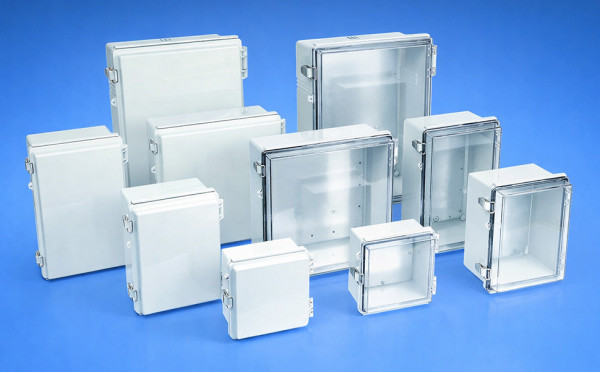
When an electrical installation is exposed to rain, dust, mud, or frequent cleaning, choosing the right cabinet stops being a minor detail and becomes a key reliability factor. In these cases, an IP67 hinged cabinet is a particularly practical solution: it protects the electronics in harsh conditions while making access easier for maintenance, inspections, and upgrades.
1) When do you need an IP67 cabinet (and when don’t you)?
An IP67 cabinet is designed for environments with fine dust and real water exposure (rain, heavy splashes, condensation, or occasional temporary immersion). In practice, it’s ideal for:
-
Outdoor installations (facades, rooftops, gardens, parking areas, streetlights, poles…)
-
Industrial environments with airborne dust or dirt
-
Technical rooms with humidity or splash risk
-
Projects where you want to minimize incidents caused by water and dust ingress
If the cabinet will be used indoors with no humidity or dust, IP54–IP65 may be enough; but if there’s uncertainty or exposure, IP67 gives you extra margin and peace of mind.
2) IP67 in “two numbers”: what it really means
The IP code has two digits:
-
First digit (solids/dust): 6 = dust-tight.
-
Second digit (water): 7 = protection against temporary immersion.
Note: IP67 does not mean “permanently submersible” or “extreme high-pressure jets.” If your case involves prolonged immersion or high-pressure wash-down, consider other protection levels (e.g., IP68/IP69 depending on the scenario).
3) Real advantages of a hinged design
In electrical cabinets, day-to-day practicality matters. A hinged design offers clear benefits:
-
Fast, convenient access to breakers, power supplies, PLCs, terminal blocks, relays, etc.
-
Less risk of compromising sealing: opening/closing a door avoids the typical wear of covers secured with multiple screws.
-
More organized maintenance, especially with periodic inspections.
-
Better installation experience when working with the internal mounting plate (cleaner, safer component fastening).
4) Quick checklist to choose the best IP67 cabinet
Here’s a practical list (installer to installer) to get it right without wasting time:
1) Where will it be installed and what will it face?
-
Outdoors with rain/direct sun, fine dust, marine environments, chemicals, etc.
-
If impact or vandalism is possible, add mechanical resistance (IK) as a criterion alongside IP.
2) What size do you need today… and in 6–12 months?
Size it considering:
-
Real component volume (not just “it fits”).
-
Cable bends, bending radius, and clearances.
-
Room for future expansion (an extra PSU, switch, surge protector…).
3) Will you open it often?
If the answer is “yes,” a hinged cabinet is almost mandatory: it saves time and reduces errors.
4) How easy is it to work inside?
Look for models with:
-
An internal mounting plate for fast, secure component installation.
-
Enough space for trunking/ducts, terminals, and tidy wiring.
5) How will it be mounted: wall or pole?
-
For walls, mounting lugs/ears are very useful.
-
For infrastructure installations (lighting, telecom, irrigation), consider a pole-mount bracket/kit.
6) How will cables enter without losing IP67?
Real sealing depends heavily on:
-
Proper cable glands
-
Correct bulkhead fittings and gaskets
-
Good installation practices (avoid strain, misaligned entries, etc.)
7) Do you need a “ready-to-install” customization?
In many projects, workshop time is the biggest cost. Consider ordering the cabinet already prepared with:
-
CNC machining (openings, connectors, pushbuttons, windows…)
-
UV digital printing (logo, technical references, identification)
-
Labels or membrane keypads, if applicable
5) Typical applications where IP67 + hinges are a perfect match
-
Control panels for irrigation, pumping, and water treatment
-
Outdoor automation (gates, barriers, access control)
-
Field telemetry and sensor installations
-
Solar/PV control and protection (depending on system design)
-
Industrial environments with fine dust and humidity
Need help choosing the right model?
If you tell us where it will be installed, which components it must house, and how cables will enter, we can recommend the best cabinet and, if needed, prepare it with machining and identification so you can install it faster and with fewer errors.